


Are everyday objects getting smarter than smartphones? Breakthroughs in IoT (Internet of Things, which connects everyday devices) are changing how our devices work by using fast networks, sharper sensors, and real-time data. Advances like 5G, Wi-Fi 7, and LPWAN (low power wide area network, a network that helps small devices communicate) are making systems like car safety, healthcare, and retail more efficient. With billions of connected devices emerging, these innovations are setting the stage to transform our daily lives and work.
Overview of IoT Technology Breakthroughs
IoT devices are growing fast. Experts say there could be 32.1 billion devices all over the world by 2030. This growth shows that sensor-driven tech is becoming key to everyday products and systems. Since December 18, 2025, data tells us that everyday objects are not only gathering data but also using it to improve our lives.
The enterprise IoT market grew 15% in 2023 and reached $269 billion. It is expected to hit $301 billion in 2024 and keep growing at a 15% annual rate until 2030. This growth is clear in industries like healthcare, automotive, agriculture, and retail. For instance, a sensor in a modern car monitors engine performance to help with maintenance and safety, showing how smart connectivity is quickly affecting many sectors.
This technological evolution highlights five key areas:
- Massive device growth boosts global connectivity.
- Better device integration makes systems smoother and more reliable.
- Improved networked sensors speed up secure data collection.
- AI-powered analytics with digital twins turn data into useful insights.
- Together, these advances pave the way for stronger security in IoT networks.
Connectivity Innovations Driving IoT Breakthroughs
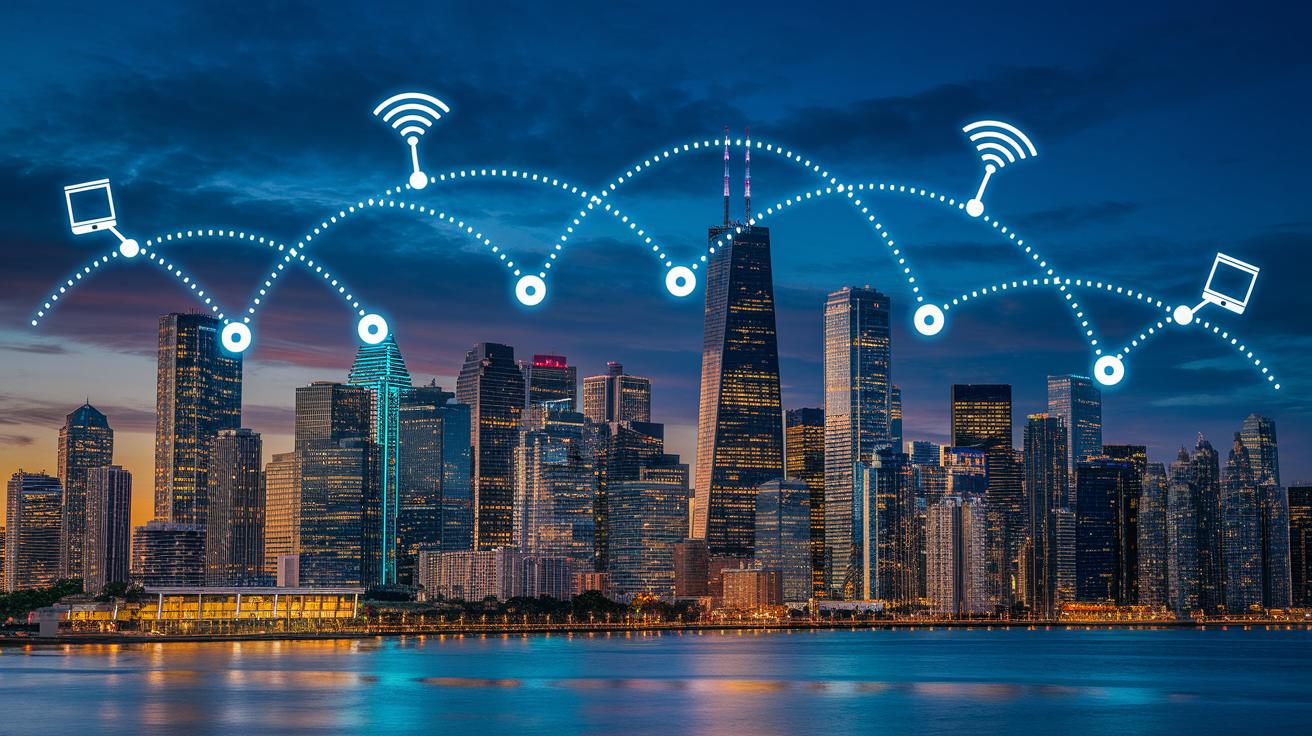
New connectivity tech is changing IoT systems. These networks move data faster, cut delays, and boost efficiency over older methods. They help power smart cities, factory automation, and remote monitoring.
- 5G is on track to reach nearly 5 billion subscriptions by 2026. It offers quick, low-latency links that work well for real-time apps.
- Wi-Fi 7 uses 320 MHz channels and 4K-QAM. This nearly doubles speed versus Wi-Fi 6, making it great for heavy data tasks.
- LPWAN (low-power wide-area network) connects devices over long distances with minimal energy. It’s ideal for remote spots where only a little data is needed.
- Satellite links provide steady connections for hard-to-reach areas, which is important for real-time emergency reports.
These upgrades help expand and improve IoT systems. By refining how devices talk to each other, industries can handle more data faster and more reliably. This makes IoT a strong tool for public safety, healthcare, and transport, even in challenging environments.
AI and Edge Computing in IoT Technology Breakthroughs
Edge computing is quickly changing how IoT works. It processes data right where it’s created, so there’s less delay and fewer data bottlenecks. Some experts say the global edge computing market could hit $350 billion by 2030, with revenues reaching $274 billion by 2025. With up to 64 billion IoT devices expected by 2025, managing this massive flow of data locally will be key. For instance, processing data at the edge can cut response times in half compared to traditional cloud systems, which helps in making quick decisions for critical tasks. This faster, local processing boosts everything from smart factories to monitoring public infrastructure in real time.
AI makes these advances even more powerful. When you mix artificial intelligence with IoT, a combination known as AIoT, devices use quality sensor data to learn and adjust on the fly. In a modern factory, sensors pick up details about machine performance, and local data processing kicks in immediately. A real-time machine learning model might spot unusual patterns and trigger a maintenance alert before a small issue grows into a big problem. This blend of edge computing and AI not only speeds up responses but also keeps systems running safely and efficiently.
Enhancing Security and Privacy: IoT Technology Breakthroughs

Cyber attacks are ramping up, and IoT devices are prime targets. A 2023 study warns that cybercrime losses could hit $10.5 trillion by 2026. As more sensitive data flows across networks, a single breach can have a huge impact.
The IoT security market is growing fast. Between 2022 and 2023, it jumped from $34.2 billion to $38.7 billion. Companies are investing in secure communications and protecting data. Measures like device encryption and zero-trust models now verify each device’s identity all the time. These steps help create a strong barrier and build trust.
New risk management techniques are also emerging. AI-driven tools now catch risky behavior in real time, which helps stop breaches quickly. This proactive approach reduces damage and keeps systems in line with new regulations. Businesses are using these innovations to stay secure in an ever-changing digital landscape.
Digital Twins and Analytics Breakthroughs in IoT Technology
Digital twins are live, digital copies of physical systems. They update in real time using sensor data, which helps companies keep a close eye on how things work. The market for these twins is expected to grow several-fold through 2025. For example, a digital twin of a factory machine can show its current condition and spot trouble before it becomes a serious issue.
Cloud platforms are also getting smarter. They now handle large amounts of data quickly and turn it into clear, usable insights. With better data visualization tools, even complex information becomes easier to understand. This means businesses can run smoother and access important details faster.
One key benefit is predictive maintenance. By merging digital twins with smart analytics, companies can notice early signs of wear on their equipment and plan repairs before problems occur. In a factory, sensors send real-time data to a digital twin, which then warns about potential failures. This approach helps cut costly downtime and improves both precision and safety. Together, digital twin technology and cloud analytics are changing the way organizations manage and extend the life of their assets.
Industrial and Home Automation: IoT Technology Breakthroughs

Manufacturing is modernizing by using digital tools that boost efficiency and safety. Data from PwC shows that 90% of manufacturers see digital processes as key to raising productivity and reducing risks. Factories now use smart automation systems that gather real-time information with sensors. Robotics, smart controls, and connected devices work together to catch problems early and adjust operations on the fly. This approach cuts downtime and keeps workers safer by reducing manual tasks. As these digital systems grow, traditional production lines quickly become agile, tech-driven operations that can meet global market demands. Manufacturers can adapt to changes and personalize production instantly, which raises product quality and lowers costs.
| Sector | Market Forecast | CAGR |
|---|---|---|
| Manufacturing | $301 B (2024) | 15% |
| Smart Home | $246 B (2025) | 25% |
| Retail IoT | 19.6% CAGR (2020–2025) | 19.6% |
Digital advances in both industry and homes are also driving greener operations. Smart grid systems and energy-efficient devices help offset the 1 to 1.5 percent of global greenhouse gases that digital tools produce. In smart homes, technology boosts comfort while managing energy use by adjusting lights, heating, and appliances based on current data. In retail and industrial settings, predictive analytics help reduce waste, schedule timely maintenance, and cut energy consumption. These smart solutions allow better tracking of power use and promote greener practices. As companies upgrade their systems, they lower their carbon footprint and build a more sustainable, future-ready environment.
Next-Gen and Emerging IoT Technology Breakthroughs
Blockchain is changing how we secure IoT. Experts say blockchain could add $2.4 billion by 2026 by giving us a safe, shared way to store and exchange data. In smart cities, sensors and devices use blockchain to check and confirm information. For instance, networks of cameras, traffic monitors, and emergency systems now get real-time verified info. This could lower fatalities by 80% and assaults by 30%, making public services more reliable and secure.
The metaverse is also driving IoT forward. Market forecasts predict the metaverse could reach $679 billion by 2030. This digital space blends real and virtual worlds through AR/VR wearables that mix live sensor data with digital screens. Users get real-time insights that help them navigate both physical and digital environments. Whether it’s for interactive fun or on-the-go industrial checks, augmented reality shows that IoT can bring the digital experience into our everyday lives.
Voice control is reshaping how we use our devices. With 27% of online users relying on voice searches on mobile, voice interfaces are becoming key in homes and workplaces alike. They help power home automation, hands-free communication, and industrial monitoring by letting devices respond quickly to spoken commands. This growing trend means more devices will connect and work together, keeping IoT systems flexible and effective across many different areas.
Final Words
In the action, this article tracked the growth of IoT technology breakthroughs from surging device numbers to smarter connectivity and enhanced security measures. It explored how AI integration and edge computing lower delays while digital twins and automation reshape work and home settings.
The blog painted a clear picture of trends driving global progress in IoT. The future looks bright with reliable data, smarter devices, and emerging tech paving the way for a more connected world.
FAQ
What are IoT technology breakthroughs today?
The latest IoT breakthroughs integrate advanced networks like 5G and Wi-Fi 7, AI integration, robust security measures, and expanded device connectivity, driving smart operations across various sectors.
What were the IoT technology breakthroughs in 2022?
The IoT breakthroughs in 2022 advanced sensor integration, improved connectivity, and early digital twin applications that enhanced performance in healthcare, automotive, and manufacturing industries.
What were the IoT technology breakthroughs in 2020?
In 2020, key breakthroughs focused on initiating 5G deployments, early digital twin projects, and basic AI integration that laid the groundwork for improved device communication and performance.
How many IoT devices are expected by 2030?
Projections forecast that IoT devices could reach 32.1 billion by 2030, driven by rapid expansion in connectivity and a growing demand for smart, interconnected systems.
What does future IoT technology hold?
Future IoT technology promises faster connectivity, advanced AI-driven analytics, stronger security, and broader applications across sectors to boost operational efficiency and innovation.
What are the current IoT growth statistics?
Growth statistics show enterprise IoT markets expanding from $269 billion to $301 billion with a steady annual increase, alongside significant rises in device adoption and connectivity improvements.
How do IoT Breakthrough Awards and innovation ideas recognize progress?
IoT Breakthrough Awards acknowledge standout achievements in connectivity, AI, and security, while innovation ideas highlight creative solutions like blockchain and AR/VR that transform industry practices.