
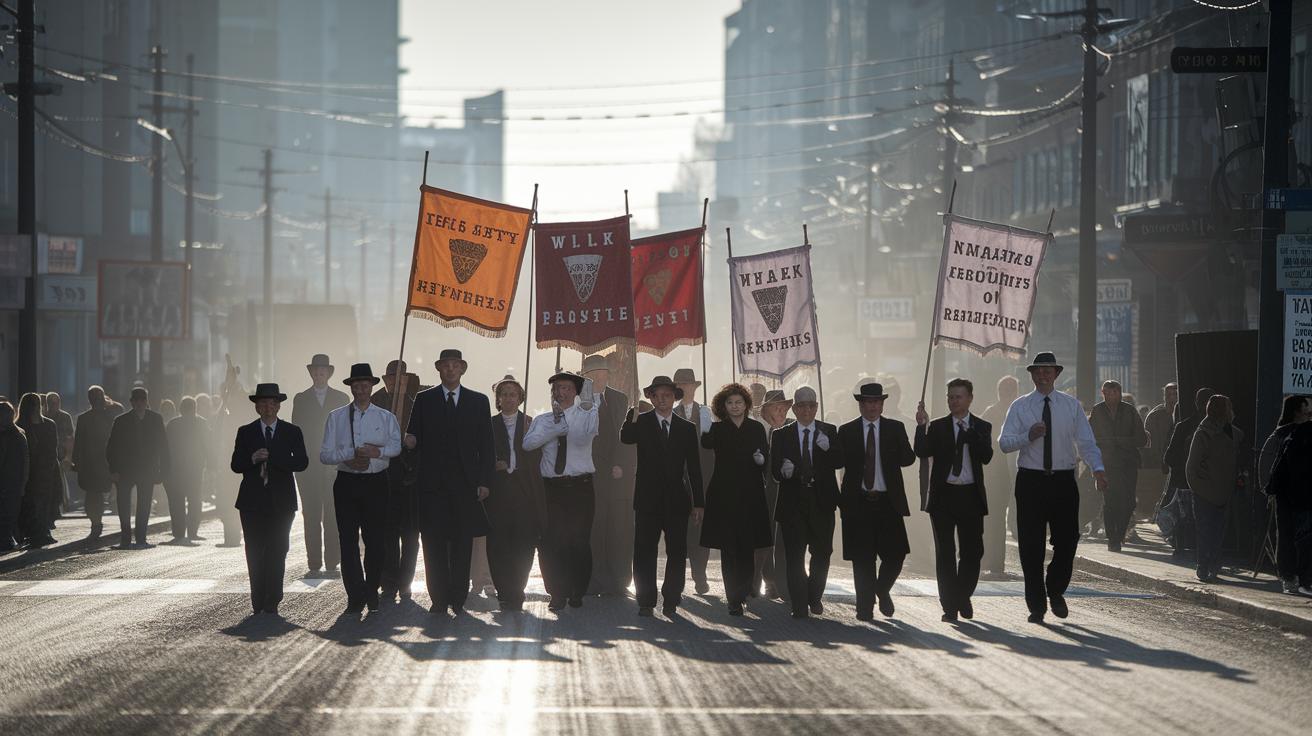

Have you ever wondered if a few strong leaders could change an entire country? During the industrial boom, many people saw big companies and their allies quiet the voices of everyday citizens. Reformers stepped up, pushing for direct primaries and secret ballots (private votes) so everyone had a say. Their hard work not only reshaped government but also paved the way for modern democracy. This post looks at how those changes led to fairer representation.
Historical Context of Progressive Era Political Reforms
Between 1890 and 1920, America experienced major political shifts as rapid industrial growth and expanding cities reshaped everyday life. New factories emerged and urban centers grew quickly, creating challenges in housing, sanitation, and public safety. At the same time, established political machines kept power in the hands of a few, limiting the voice of ordinary citizens.
During this time, reformers questioned a system that largely benefited big business and established political elites. Urban growth and economic change sparked strong calls for more democratic government. Citizens pushed for reforms that would make the government better serve everyone, arguing that modernizing political institutions was key for a country in transition.
In response, lawmakers and activists worked to open up the political process. They introduced measures like direct primaries, initiatives, referendums, and recall. These ideas helped create a government that was more transparent and accountable, setting the stage for the broad changes that followed.
Electoral Modernization under Progressive Era Political Reforms

The Progressive Era (1890 to 1920) brought sweeping changes that shifted power from party bosses to everyday voters. Direct primaries let citizens pick their candidates, reducing the control held by established party leaders and paving the way for a fairer system.
A major reform was the secret ballot (also known as the Australian ballot), which ensured that votes stayed private and free from coercion. Countless citizens, once fearful of retribution, soon stepped up to vote confidently, knowing their choices remained confidential.
Early trials with initiative, referendum, and recall further increased voter influence. These measures allowed the public to propose laws, reject decisions made by their representatives, or remove officials who no longer served the community. These changes made political participation more transparent and helped the government better reflect the will of its people.
Voter Expansion and Women’s Suffrage in Progressive Era Reforms
Between 1890 and 1920, women took on new leadership roles that changed America’s politics. They built on earlier efforts, from the Seneca Falls meeting to court cases like Minor v. Happersett and pushes for the 14th and 15th Amendments, to clear the way for the 19th Amendment.
Jane Addams, who founded Chicago’s Hull-House, became a key voice for change. At the 1906 NAWSA Convention, she spoke about "civic housekeeping" and argued that voting women could pass laws to improve city life. Her words struck a chord with women of all backgrounds, inspiring them to form clubs and coalitions for a common goal.
Important groups during this time included:
| Organization | Role |
|---|---|
| National American Woman Suffrage Association | Led a nationwide campaign for voting rights |
| National Association of Colored Women | Worked to ensure the fight included marginalized communities |
| Woman’s Christian Temperance Union | Connected suffrage with temperance work, helping push for Prohibition in 1919 |
Local organizing was crucial too. One leader noted, "Start with a surprising fact, in one meeting, a small town’s women changed local opinion, sparking debates that reached state legislatures." This community spirit helped win key legislative changes.
By joining national efforts with local action, women not only broadened voting rights but also reshaped American democracy through smart, determined reforms.
Grassroots Mobilization and Reformist Strategies in Progressive Era Reforms

Progressive reformers sparked change by organizing clubs, lecture tours, and public protests that got people talking. They held community meetings and handed out pamphlets to gather support for the reforms they believed in. Their carefully planned speaking tours and focused demonstrations encouraged local lawmakers to consider fresh ideas. They used clear images and simple messages to empower everyday citizens to act.
Local activists marched through neighborhoods, turning quiet streets into centers of civic action. Door-to-door pamphlets clearly called on people to get involved, and public speeches on busy corners united diverse groups around the need for government accountability. Groups like the National Women’s Party pressed citizens to challenge old power systems and push for fast legislative reforms.
- Clubs and neighborhood meetings built a strong network of civic knowledge.
- Speaking events and pamphlet campaigns helped educate communities.
- Targeted marches and protests increased pressure on elected officials.
For example, one county meeting led to a change in local policy. This example shows how steady, organized efforts can create a more inclusive government. Together, these grassroots actions kept legislative work moving and reshaped local and state politics during a time of rapid change.
Anti-Corruption Measures and Investigative Journalism in Progressive Era Political Reforms
Reformers pushed for stronger ethics laws and tougher campaign finance controls to clean up government. Lawmakers aimed to end the corruption that had long troubled politics. Investigative journalists played a big role, using detailed reports to force political leaders to change long-standing habits.
A key example is Ida B. Wells. She fought hard against lynching, shining a "light of truth" on injustices many tried to hide. Her work showed that when the public is informed, the system is forced to act. Her exposés stirred public outrage and led to demands for laws that kept officials accountable.
Reporters digging into corruption relied on careful research and clear details to expose wrongdoings in government and business. Their stories helped drive new rules for campaign oversight and tougher penalties for those who misused power. They made it clear that strong checks were needed to prevent abuse.
Together, honest reporting and stronger ethics rules reshaped politics into a system that values transparency and accountability. These actions built public trust by proving that exposing corruption can lead to real change.
Anti-Trust and Business Regulation in Progressive Era Political Reforms

Between 1890 and 1920, reformers worked to rein in the unchecked power of large companies. They believed that government action was needed to stop monopolies from controlling the market. The Sherman Antitrust Act gave officials the legal means to break up dominant firms, sparking campaigns that pushed big businesses to compete with smaller ones.
Reform efforts also reshaped economic policy. The Interstate Commerce Commission got stronger and kept a closer eye on railroads and essential transport networks, making sure operations were open and fair. New federal agencies were created to enforce strict business rules and hold companies accountable for their actions.
Key reform measures included:
- Enforcing antitrust laws to break up large conglomerates.
- Setting fair market rules to boost competition.
- Establishing federal agencies to monitor and regulate industry practices.
These steps weakened the hold of monopolies and changed how the government interacted with big business. The Progressive Era’s trust-busting efforts continue to influence how business is regulated today.
Reformist Presidents and National Legislation in the Progressive Era Political Reforms
The era's top leaders redefined government with reforms that touched nearly every corner of society. Theodore Roosevelt's Square Deal broke up monopolies and set up regulatory commissions to keep big companies fair. His bold actions forced powerful firms to compete on equal terms, proving that strong leadership can rein in corporate abuses. One clear example: his firm regulatory stance once led to breaking up a company that controlled a quarter of the nation's rail traffic.
Woodrow Wilson, meanwhile, pushed his own transformative agenda with the New Freedom. He slashed tariffs to ease trade and championed the Federal Reserve Act, which created a central bank to stabilize the economy. His steps addressed long-standing financial issues and aimed to build a fairer economic system.
Both presidents tapped into executive orders and innovative laws to modernize government. Their policies not only changed economic practices but also laid the groundwork for stronger labor and consumer protections, setting early blueprints for today’s reforms.
Roosevelt and Wilson prove that decisive leadership and smart, targeted legislation can trigger wide-ranging changes in our political landscape and public policy.
Modern Legacy of Progressive Era Political Reforms

Reforms pushed through between 1890 and 1920 still influence today's talks about our government. Changes like direct primaries, expanding who can vote, laws against corruption, and new market rules still guide efforts to build trust and clear accountability. These updates, made during times of fast social change, set the stage for the voting and transparency practices we see now.
These old reforms act as a guide for making today's policies better. They remind lawmakers that updating government systems to fit public needs can spark more citizen involvement and tighter checks on power. For example, tweaks to voting rules and steps to limit party influence reflect earlier moves that shifted power from party bosses to everyday voters.
Key elements of the Progressive legacy include:
- Voting changes that let citizens pick candidates directly.
- Expanded voting rights that empowered many groups to influence policy.
- Laws designed to fight corruption and keep government accountable.
- Regulatory rules that continue to shape debates over market fairness and oversight.
These points show that past efforts to control political excess can still inspire new ways to boost trust in how our democracy works.
Final Words
In the action, this article covered key shifts during the Progressive Era. It traced political moves like modernizing elections, expanding suffrage, and boosting grassroots efforts. We reviewed anti-corruption measures, trust regulation, and reform-minded leadership that reshaped governance and business practice.
These progressive era political reforms not only redefined government but also light a spark for today's debates on accountability. The legacy of these reforms shows that committed citizens can drive lasting change.
FAQ
What were the 4 goals of the Progressive movement?
The four goals of the Progressive movement involved increasing democratic participation, regulating big business, promoting social welfare, and reducing corruption through measures like electoral reforms and expanded suffrage.
What are some key Progressive reforms?
The key Progressive reforms include electoral modernization (direct primaries and secret ballots), anti-corruption laws, trust busting to regulate big business, and expanding voting rights through the suffrage movement.
How is the Progressive movement defined?
The Progressive movement is defined as a series of reform efforts from 1890 to 1920 aimed at curbing political corruption, enhancing democracy, and reining in corporate power while addressing social issues.
What were the political, cultural, and economic outcomes of the Progressive movement?
The outcomes of the Progressive movement were increased voter participation, a more inclusive political culture, and economic reforms that introduced regulations on big business and improved public accountability.
What role did Progressive Era presidents play?
Progressive Era presidents like Theodore Roosevelt and Woodrow Wilson drove reforms by pushing trust-busting policies, modernizing electoral systems, and initiating legislative changes that made government more responsive to its citizens.
What factors caused the Progressive Era?
The Progressive Era emerged from pressures such as rapid industrial growth, urban expansion, political corruption, and social inequality, all of which fueled demands for democratic renewal and reform.
Why was the Progressive Era important?
The Progressive Era was important because it reshaped American politics and society by expanding suffrage, establishing anti-corruption measures, and laying the groundwork for modern government accountability and regulation.
How did politics change during the Progressive Era?
Politics during the Progressive Era changed through the introduction of direct primaries, the secret ballot system, and other reforms that shifted power from party bosses to the electorate and increased governmental responsiveness.
What three reforms made government more responsive to voters during the Progressive Era?
The reforms included the implementation of direct primaries to reduce party boss control, the use of initiatives and referendums that empowered voters, and expanded voting rights that increased public participation in elections.
What were the major reform movements during the Progressive Era?
Major reform movements during the Progressive Era targeted political corruption, business practices through trust busting, and social inequalities via expanded suffrage and grassroots mobilization, reflecting a broad push for democratic change.