

Ever wonder why some nations seem unstoppable? Today’s strongest countries mix a booming economy, a solid defense, and smart tech to shape our world. They combine financial power with strong militaries to keep the global balance in their favor. In our look at the top five nations, we break down how each one leads on the world stage. Their mix of strength and innovation gives us a fresh view of what real power means today.
Ranking the Top 10 Most Powerful Countries Worldwide
Power is measured by a mix of a strong economy, military might, new technology, and cultural reach. In 2024, the top countries combine solid economies, smart defense spending, and cutting-edge innovations that influence trade and global security. Every nation on this list shows its own strengths that set trends around the world.
- United States – The U.S. carries a $27 trillion economy and earned a Power and Influence Score of 95.36 for 2025. Fun fact: Before computers, engineers used slide rules to map out space missions.
- China – By growing its Belt and Road Initiative in Latin America, China drives new trade routes and builds big infrastructure projects that challenge older powers.
- Russia – With rich reserves of natural gas, oil, and minerals, Russia boosts its influence through projects like the Power of Siberia pipeline, which also strengthens its ties with Asia.
- Germany – Known as Europe’s economic engine, Germany leads with investments in hydrogen fuel, offshore wind power, and large-scale solar energy projects.
- United Kingdom – After Brexit, the U.K. has struck fresh trade deals with countries like India and Canada to secure its place on the global stage.
- South Korea – Leading in tech, South Korea is home to giants like Samsung and SK Hynix, especially in the semiconductor industry.
- France – As a permanent member of the U.N. Security Council, France plays a key role in shaping international climate and security policies.
- Japan – With its strong focus on robotics, artificial intelligence, and space exploration that includes a lunar rover, Japan continues to set the pace for innovation.
- Saudi Arabia – Through Vision 2030 and bold projects like NEOM, Saudi Arabia is working to emerge as a hub for renewable energy.
- Israel – Israel combines advanced military technology with strong sectors in cybersecurity and AI, rounding out the list of global power players.
Methodology: Criteria for Ranking Powerful Countries
Researchers examined 190 nations using 60 measures in seven key areas: economy, military, innovation, diplomacy, culture, geography, and stability. Each area was rated on a 1-to-100 scale, giving equal weight to every measure. Think of it as a balanced report card where no subject overshadows another.
This even-handed method uses both familiar metrics and up-to-date global trends. It looks at factors like military alliances (for example, NATO) and important projects like China’s Belt and Road. This way, economic strength is weighed alongside modern factors like tech advances and smart diplomacy. When a country excels in one area but falls short in another, the overall score reflects that mix.
The scores for each category were averaged to create a single Power and Influence Score that ranges from 95.36 at the top to 59.23 at the bottom. This clear, data-driven approach makes it easy to compare nations by blending tough numbers with real-world global ties.
Economic Power Index of Leading Powerful Countries
The United States tops the list with a $27 trillion GDP. This strong economy drives research and shapes global markets. It poured resources into technology and infrastructure that helped it become a leader in finance and trade.
China uses its Belt and Road initiative to secure trade routes and gather resources. The program builds large networks that smooth global supply chains and push the country’s influence further.
Germany invests heavily in green energy projects like hydrogen, wind, and solar. This focus supports sustainable growth in Europe and keeps the nation stable amid shifting markets.
The United Kingdom is strengthening its position with post-Brexit trade deals. These agreements open up markets and boost resilience in a rapidly changing global economy.
Saudi Arabia is transforming its economy through Vision 2030 and projects such as NEOM. These efforts move the country away from relying solely on oil and pave the way for a more diverse financial future.
India is quickly rising as an economic force. Its growing digital and industrial sectors are reshaping global trade and adding momentum to the power balance among nations.
Military Capabilities of Top Powerful Countries
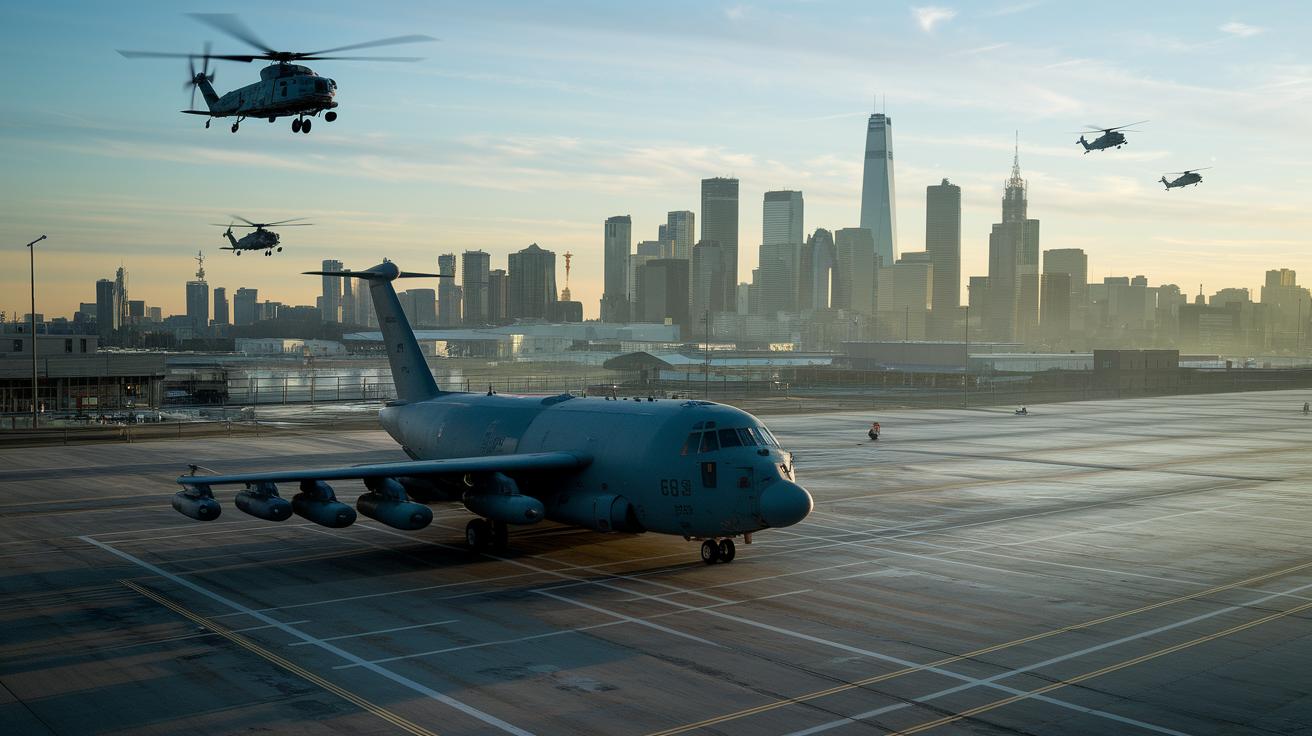
The United States leads in military strength with large active forces and advanced air, land, and sea equipment. Its hefty defense budget funds continual upgrades, from fighter jets and drones to missile defense systems that can be deployed worldwide in a hurry.
Russia also holds a top spot in military power. It uses its rich natural resources to back long-running projects like the Power of Siberia pipeline. This project not only drives the economy but also supports military logistics. Russia’s mix of upgraded tanks and missile systems keeps it in the elite group, even with economic challenges from sanctions.
China runs major drills such as "Justice Mission 2025" to prepare for blockades around Taiwan. These exercises underline its focus on modern combat scenarios. Heavy investment in new fields like cyber warfare and hypersonic weapons ensures that China remains competitive. Meanwhile, Israel shows that even smaller forces can be mighty by using innovative technology like the Iron Beam laser defense system.
- Large active forces and diverse equipment
- Smooth logistics with robust energy strategies
- Next-generation combat tools, from drones to lasers
Modernization has let nations like Japan, the United Kingdom, and France achieve high readiness levels. They prove that smart use of technology and efficient resource management can match the might of larger forces.
Diplomatic and Soft Power Influence of Powerful Countries
France uses decades of diplomatic experience, a strong economy, and steady defense spending to strengthen its global role.
The U.K. combines active trade efforts with reliable military capability. Its robust economic partnerships and post-Brexit policy tweaks boost its international profile.
Japan blends cutting-edge advances in robotics, AI, and space exploration with economic resilience and solid defense. This mix shows off both its forward-thinking goals and established strengths.
South Korea pairs its globally popular culture and tech expertise with a trusted security framework. By mixing soft power with practical defense steps, it builds strong international ties.
Saudi Arabia and Israel show that bold reform measures and innovative tech can expand a nation’s diplomatic reach when matched with financial and security upgrades.
| Key Insight | Impact |
|---|---|
| Integrated national strategies | Boost overall international influence |
| Combining soft power with clear policies | Creates a cohesive and effective diplomatic front |
Alliance Strategies and Partnerships Among the World's Most Powerful Countries

Global power is shifting, and alliances are evolving to keep up. Older defense setups such as NATO, China’s Belt and Road initiative, and U.S. pacts with Japan and South Korea show traditional ways of working together. Now, advanced technology and rapid-response plans are taking center stage in alliance strategies.
A clear example is the AUKUS pact among the United States, United Kingdom, and Australia. Regional figures show that this alliance not only tightens military coordination but also boosts joint investments in cybersecurity and undersea systems. Shared intelligence is moving faster, and naval drills now focus on new threats. This approach reinforces quick defense actions while furthering research into defense technology.
Countries are also expanding their intelligence-sharing beyond traditional areas. They are working together on cyber surveillance and digital defense to face current security challenges while protecting global interests.
- Sharing technology strengthens coordinated defense.
- New group agreements enhance rapid-response and joint intelligence.
- Robust cyber and naval operations highlight the changing nature of alliances.
These updated alliance strategies reveal how powerful nations are reshaping their defenses to meet modern global challenges.
5 most powerful countries in the world: Triumph
India's fast-growing economy and tech sector have put it right in the spotlight. Its large, tech-smart market and solid manufacturing base are changing the old global power rules.
Brazil is taking the lead in clean energy and careful resource use. Its new energy projects are setting high standards and challenging long-held leaders.
Indonesia is making the most of its spot in Southeast Asia and a booming digital scene to boost its global clout. A focus on new ideas and tech investments gives it an edge that reaches far beyond its borders.
Türkiye, which connects Europe and Asia, is growing its economy and defense skills while building stronger international ties that support its rising influence.
These moves show that classic power hubs are now sharing the stage with nations that are taking bold steps in key economic and tech areas:
- India: Rising tech advances and strong industrial growth.
- Brazil: Leading clean energy development.
- Indonesia: Using digital progress for greater global reach.
- Türkiye: Bridging continents with stronger defense and diplomacy.
These changes point to a more varied global power scene where new trends shift the balance in every region.
Final Words
In the action, we ranked the most powerful countries in the world by looking closely at economic strength, military might, soft power, alliances, and emerging trends. We broke down how top players like the United States, China, and Germany stand out while also examining how nations like India and Türkiye shift global dynamics. The process used clear, data-backed criteria to detail each country’s influence on world affairs. The roadmap offers a straightforward look at global power that helps us understand international trends with confidence and clarity.
FAQ
Q: What are the top powerful countries in the world?
A: The list of top powerful countries includes the United States, China, Russia, Germany, the United Kingdom, South Korea, France, Japan, Saudi Arabia, and Israel, each ranked by economic, military, and technological strength.
Q: What is the most powerful country by military and which nation has the strongest army?
A: The question on military might highlights that the United States leads with unmatched defense spending, advanced technology, and extensive manpower, making it the most powerful by military measures and army strength.
Q: Are there predictions for the most powerful countries in the coming years?
A: Predictions for 2025 and 2026 suggest the United States will maintain its lead while China and emerging powers continue to grow, influenced by evolving economic trends and military innovations.
Q: Are the most powerful countries also economic leaders?
A: The query about economic power shows that countries like the United States, China, Germany, and Saudi Arabia drive global economic performance, thanks to large GDPs, trade initiatives, and innovative infrastructure projects.
Q: Is the USA still considered a superpower?
A: The discussion on superpower status indicates that the USA remains a superpower due to its robust military, leading economy, and significant cultural and diplomatic influence around the world.
Q: Who are considered the top superpowers in the world?
A: The inquiry into superpowers identifies the leading nations as the United States, China, Russia, the United Kingdom, and France, each exerting global impact through a blend of military, economic, and diplomatic influence.