
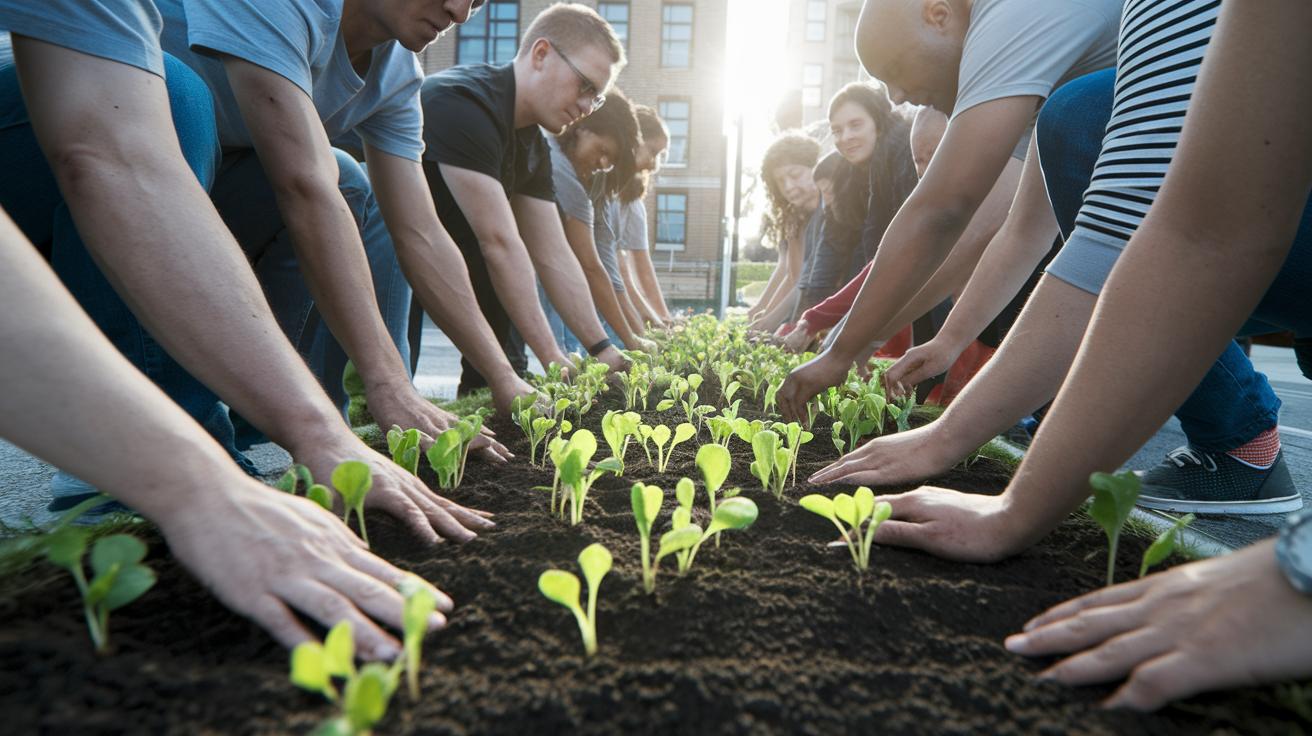

Small town ideas can spark big change. Across America, people are using simple fixes to tackle big community issues. Neighbors are turning abandoned spaces into local hubs to address energy, health, and public service needs.
These small projects help boost local economies and bring neighbors closer together. By embracing hands-on innovation, communities are making improvements often missed by larger institutions. This post highlights how everyday efforts are driving lasting, positive change nationwide.
Understanding grassroots innovation in America Today
In America, grassroots innovation is when local communities come together to solve everyday problems using creative ideas. This bottom-up approach lets individuals and small groups develop simple solutions in areas like energy, health, and local services. These projects mirror global efforts, such as citizen-led energy projects in Finland and science initiatives like REPARA, KUL, and TUR. They rely on accessible resources, active participation, and shared community values. For instance, one neighborhood turned an unused public space into a community garden that now supplies fresh produce to local residents. This example shows how small projects can spark big changes with creative and lasting solutions.
Grassroots innovation is also key for solving local issues and shaping social enterprises. It empowers residents to tackle challenges directly by creating solutions that boost the environment, public health, and local economies. Neighbors combine traditional know-how with modern tools to address problems that bigger institutions might overlook. These efforts result in clear benefits, such as improved energy efficiency and stronger health-equity programs. By addressing real needs with local resources, grassroots projects build a foundation for progress that strengthens community resilience and economic well-being.
Historical roots of grassroots innovation across U.S. communities

In the 1800s and 1900s, people both in cities and small towns found clever ways to solve local problems. In small towns, residents built water systems, fixed local transport, and even started their own schools. In urban areas, people turned everyday items into tools for lighting and heating. Neighbors would gather in small workshops to exchange practical fixes and share how-to tips. These hands-on lessons helped families improve their lives without relying on big institutions. Today, that spirit still inspires new ideas.
Over time, these quick fixes grew into formal research efforts that blended expert knowledge with local skills. Local researchers teamed up with community groups to study how households used energy, leading to smarter and more efficient systems that mixed traditional methods with modern technology. Experts and residents worked closely together, testing and refining their ideas through hands-on experiments. The early projects set a model that still guides many modern grassroots efforts, driving simple, community-based solutions that make everyday life better.
Key regional grassroots innovation case studies
Across the U.S., community efforts are making a real impact by tackling local issues head on. Local makers, city-backed incubators, and citizen researchers are mixing traditional skills with new technology to boost energy, design, and public services. They are trying out ideas like local alternative currencies for sustainability, hands-on research by citizens, and digital labs that act as testing grounds for regional progress. These projects are turning regular spaces into creative hubs, and residents are rallying behind them because they promise true change. By harnessing local talent and resources, these efforts are driving economic growth, improving everyday services, and sparking community engagement. This active approach creates jobs and builds a culture of practical, community-led innovation.
| Initiative | Location | Focus Area | Launch Year | Key Outcome |
|---|---|---|---|---|
| Detroit Makers Hub | Detroit | Maker space & digital making | 2018 | Boosted local business and teamwork to revive community skills. |
| Austin Innovation Incubator | Austin | City-backed tech startup hub | 2016 | Helped tech startups grow with mentorship and local support. |
| Boston Data Dashboard | Boston | Data-focused community fixes | 2019 | Enhanced public service response using real-time data. |
| Portland Eco-Design Collective | Portland | Sustainable design & circular projects | 2017 | Cut waste and promoted green practices through community projects. |
| Minneapolis Community Energy Co-op | Minneapolis | Renewable energy & co-op models | 2020 | Increased energy reliability and lowered costs while uniting residents. |
Challenges and enablers for grassroots innovation in America

Grassroots innovation in America often runs up against strict rules, little public funding, and systems that back big institutions. Local inventors and community groups testing out new tech ideas face long permit processes and limited financial support. For example, small energy or health projects can stall because old policies slow progress and widen the gap between fresh ideas and official practices. In one case, a community tech lab was halted by confusing local codes, showing how rules can block creative, citizen-led projects.
Community partnerships and public grants help overcome these hurdles. Volunteers and local teams pool their skills and resources to close funding gaps. Many groups secure small grants that fuel experiments and repairs, allowing residents to try ideas without waiting for major backing. This teamwork builds a support network that empowers grassroots projects to push against restrictive systems and drive change locally.
Impacts of grassroots innovation on social and economic development
Grassroots innovation projects make a real difference by reshaping communities with simple solutions. Local efforts create jobs by launching small businesses and encouraging tech startups. Community groups improve public services with practical projects like health dashboards and shared data groups that give local leaders clear tips. This approach lets residents shape policy so public funds meet real needs.
Over time, these efforts boost quality of life and renew neighborhoods. Maker spaces, community energy groups, and gender data teams help people work on their own while bringing neighbors together. Better public services and new policies lead to safer streets, stronger bonds, and smoother local operations. By turning public spaces into creative hubs, community members feel more connected and motivated. This hands-on approach builds lasting economic and social benefits that keep neighborhoods strong.
Strategies to support and scale grassroots innovation efforts

Funders, government leaders, and community advocates can boost local innovation by launching digital creative centers and mentorship programs that guide early community projects. City incubators offer safe spaces for local entrepreneurs to test ideas. One small digital lab even grew into a hub that supported young talent similar to the startup scenes seen in some U.S. cities. Community calendars and registries also help residents share useful tools and know-how, strengthening digital access for all.
Open access to technical training and stable funding further drives these projects. Free workshops, online tutorials, and peer-led sessions give people the skills they need to innovate. Programs such as the SDG Research Library, VAWG Dashboard, and Gender Equality Data Collaborative show how open-access tools can keep community engagement strong. By mixing creative education with steady funding and collaborative planning, local groups can solve urban challenges, spark economic growth, and create lasting impact.
Final Words
In the action, local efforts spark change through community-led projects, from early neighborhood initiatives to today’s digital and civic technology pilots. This article traced the evolution of grassroots innovation in America, spotlighting practical case studies, the challenges faced, and the creative solutions that drive social and economic benefits.
These community efforts reflect a clear commitment to solving local problems and boosting quality of life. Grassroots innovation in America remains a vibrant engine for progress, inspiring positive change across neighborhoods and beyond.
FAQ
What is grassroots innovation in America PDF?
The grassroots innovation in America PDF refers to a downloadable report that explains community-led breakthroughs, local problem-solving, and social enterprise design while offering insights into how citizens drive change across U.S. communities.
What are some examples of grassroots innovation and American innovation?
The examples of grassroots innovation include civic technology pilots, local maker spaces, and community energy co-ops that illustrate how residents actively create solutions and drive social enterprise, transforming local challenges into opportunities.
What does grassroots innovation mean and what theory does it represent?
Grassroots innovation means community-driven problem solving sparked by everyday people using local knowledge and collaboration. This concept embodies a theory where ordinary citizens create impactful, bottom-up solutions without traditional institutional backing.
What is notable about grassroots innovation in America 2022?
Grassroots innovation in America 2022 marks a year of increased citizen participation and digital democratization initiatives, highlighting modern community efforts that tackle local issues through creative design and expanded civic engagement.