
Can political shifts bring real economic hope? This report shows that global power changes can lead to growth, not just chaos. Directors Alan Freeman and Radhika Desai, using years of data and careful analysis, walk us through key events that signal positive trends. Whether it’s major academic meetings or solid research results, the study presents a world where change in economy sparks promise rather than doubt. Read on to see how these new insights challenge old views and offer a more optimistic look at global trends.
geopolitical economy report: Optimistic World Trends
An independent news outlet known for its original journalism and clear political-economic analysis produced this report. Under the guidance of Director Alan Freeman and Director Radhika Desai, years of research and careful commentary shaped this study. They drew on a rich archive of events and academic work to offer readers a balanced view of complex economic ties.
The report covers key events such as the 2015 GERG Summer Academy, the inaugural 2015 conference, coverage from the 2019 WAPE conference, and insights from the 2022 Conference on Non-Capitalist Mixed Economies. It paints a dynamic picture of economic change. It also fosters scholarly debate with calls for papers on political economy issues and introduces fresh ideas with a new book series on small states in a multipolar world.
Key highlights include:
- Seasoned directors with extensive expertise in economic research.
- Significant conferences and multimedia event coverage.
- Engagement with academics through calls for papers and innovative research proposals.
- Exploration of global power shifts through clear data and historical stories.
- A “Most Popular” section that appeals to a diverse readership.
This comprehensive overview makes it a trusted resource for understanding shifts in world markets and political power.
Geopolitical Economy Report Methodology and Credibility Assessment
The report uses a strong research method that focuses on clear data collection and operations. It draws on many different sources like conference presentations, videos, photos, and transcripts to back up its findings. For example, it openly details SSHRC grant applications for multipolarity research to show where the funding comes from. This method makes it easy to see how the research holds up to close review.
The report also makes its funding clear. It regularly shares details through "help wanted" notices and calls for research supported by grants. This transparency shows exactly how money supports studies of state and global economic orders. By laying out the numbers and processes, readers can see how funding influences the conclusions.
Each source used in the report meets strict editorial checks, including peer-reviewed calls for papers and independent review by GERG. This rigorous check ensures that the information comes from reliable channels. Open calls for academic input also bring in trusted perspectives. Together, these steps build a solid foundation that boosts the report's credibility.
Geopolitical Economy Report: Latin America Case Study
U.S. moves in Latin America have driven big changes in local economies. This report digs into key actions in Venezuela and Argentina that help explain broader shifts in global markets and power. It shows that policies like military blockades and complex financial plans can shape a country's economic future.
Venezuela Intervention and Economic Impact
In Venezuela, the report covers claims of dramatic U.S. actions such as a bombing and a naval blockade aimed at President Maduro's government. These steps seem designed to control the country's oil supplies. It also notes plans to sell $1.7 trillion in Venezuelan assets to benefit U.S. companies, a move that could change who holds power in the oil market. These measures not only boost political tensions but also risk making Venezuela's economy more open to outside financial pressures.
Argentina Financial Dependence Narrative
In Argentina, the report describes a different challenge marked by strong U.S. influence. A bailout package was rolled out with $20 billion in government funds and a matching $20 billion private loan. However, this package comes with an extra $82 billion in debt tied to the U.S. dollar. Critics say that these debts hurt Argentina’s financial independence and add long-term risks. They point out that U.S. tariff policies and trade rules only deepen Argentina's reliance on external forces.
The study of these cases shows how military moves, asset management, and financial strategies all work together to reshape national economies in regions where politics play a big role.
Geopolitical Economy Report: BRICS Expansion and Market Shifts

BRICS countries are changing how the world sees markets and economic power. They make up 54.6% of the planet’s population and hold 41% of global GDP. Their growing role in the economy is hard to ignore. Russia and its BRICS partners are testing a plan to use more than one currency in trade, aiming to break the strong hold of the U.S. dollar.
These moves offer a new financial network that could shift trade balances and investment flows. Experts say this is a sign of a more crowded economic landscape where traditional systems are being challenged. As BRICS expands, it may bring long-term changes to global economic policies.
| Metric | BRICS Figure | Global Context |
|---|---|---|
| Population Share | 54.6% | World population distribution |
| GDP Share | 41% | Global economic output |
| Strategic Initiative | Multi-currency system exploration | Alternative to U.S. dollar dominance |
Geopolitical Economy Report: Military Power and Economic Impacts
The report shows that U.S. arms exports make up 43% of global arms sales. That means the U.S. sells seven times more arms than China and five times more than Russia. U.S. companies lead the market, and critics say these sales back far-reaching military plans abroad. In other words, selling advanced weapons not only boosts the economy but also helps maintain global influence.
The U.S. has been very active in military actions. It has joined 251 interventions since 1991 and 469 since 1798. These numbers show a strong history of using military power to secure national interests and spark debates on how such actions shape national identity and global economic conditions.
A U.S. war secretary recently supported new initiatives that challenge international law. His comments suggest that economic goals might drive military actions, not just defense. Critics warn that this approach could change market values and impact future international relations.
Geopolitical Economy Report: Future Risk Scenarios and Projections
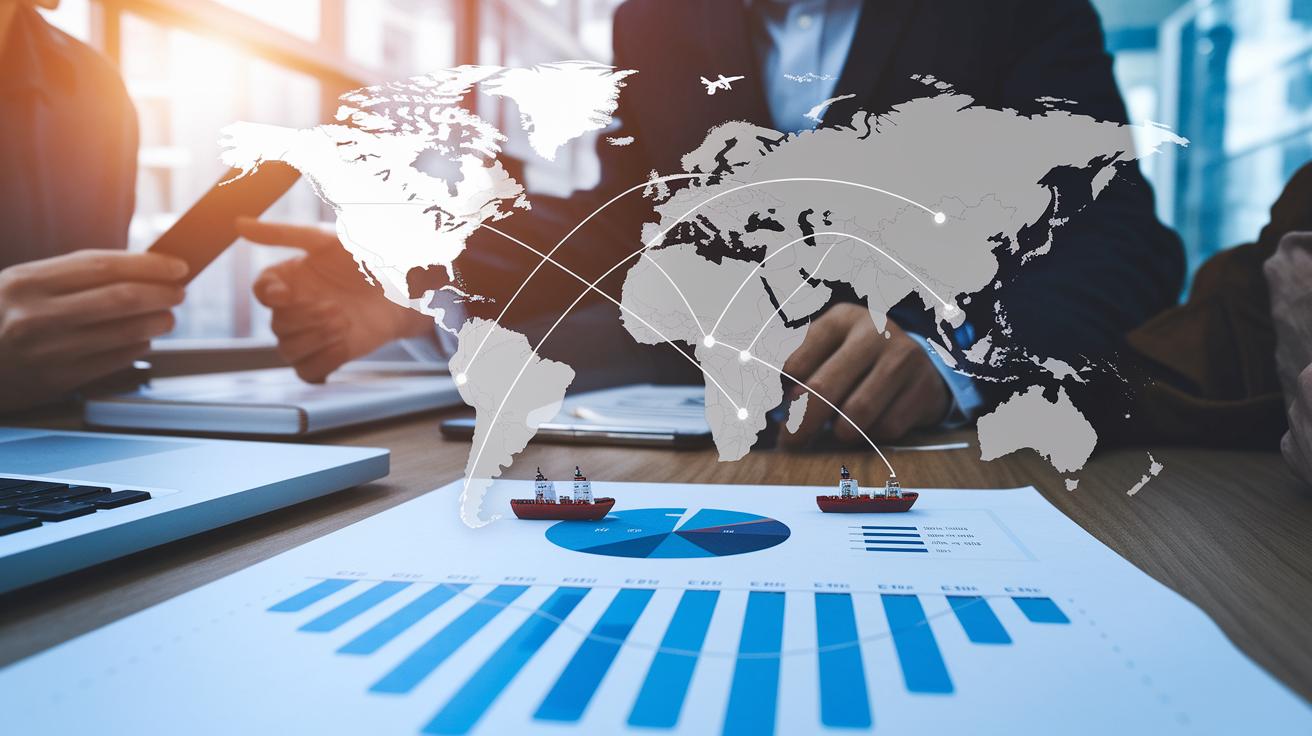
Global trade policies are shifting the world economy. This report looks at how lower tariffs between the U.S. and China may change supply chains. Experts say even small changes in tariff rules can cause ripple effects in global finance. For example, minor adjustments can change how markets depend on one another, making a strong case for diverse trade partnerships.
Political moves also add to economic risks. The report points out that in a recent UN vote, only seven countries supported ending the embargo on Cuba. This vote shows cracks in global alliances and hints that more nations may start acting on their own. Such moves can make economic deals harder and bring about unexpected challenges for global stability.
Looking ahead, some experts predict that BRICS nations might launch a multi-currency system to challenge current financial rules. Along with calls from researchers for more studies on the mix of politics and economics, these trends suggest a shift toward a world with many centers of power. New financial tools could soon reshape monetary policies and influence how countries wield economic power.
Final Words
In the action, our blog broke down origins, research methods, political moments, and global market shifts. It explains key events and leadership details in clear, accessible language.
Our report blends independent journalism with robust analysis for a smart look at current global trends.
• Independent journalism insights
• Transparent research design
• Global case studies
• In-depth BRICS analysis
• Future risk projections
This geopolitical economy report leaves readers better informed and ready to face new challenges with confidence.
FAQ
What is Geopolitical Economy Report on Wikipedia?
The Geopolitical Economy Report on Wikipedia outlines an independent news outlet known for detailed political and economic analysis. It summarizes its origins, key events, and academic engagement.
What bias is associated with the Geopolitical Economy Report?
The report addresses bias by using academic review and independent oversight. Discussions on Reddit mention critiques, though the team highlights a robust peer-review process to support factual and fair analysis.
How credible is the Geopolitical Economy Report?
The report’s credibility comes from rigorous academic engagement, transparent funding disclosures, and extensive documentation. Its detailed conference materials and research calls reinforce its reputation for reliable political-economic analysis.
Who is Ben Norton in the context of the Geopolitical Economy Report?
The report features contributions from Ben Norton, whose analysis on global economic policies and political strategies complements its thorough review of emerging economic trends.
How is the Geopolitical Economy Report represented on Reddit?
Reddit discussions about the report mix praise for its comprehensive coverage with critiques of its methodology. The community feedback reflects a diverse range of views regarding its analytical approach.
Is there a YouTube channel for the Geopolitical Economy Report?
Yes, the Geopolitical Economy Report has a YouTube channel that includes conference videos, event highlights, and expert interviews, providing visual content to complement its in-depth written analysis.
How is the Geopolitical Economy Report funded?
Funding comes through SSHRC grant applications, public “help wanted” notices, and calls for research support. These disclosures underline its commitment to transparent financing and maintaining academic independence.