
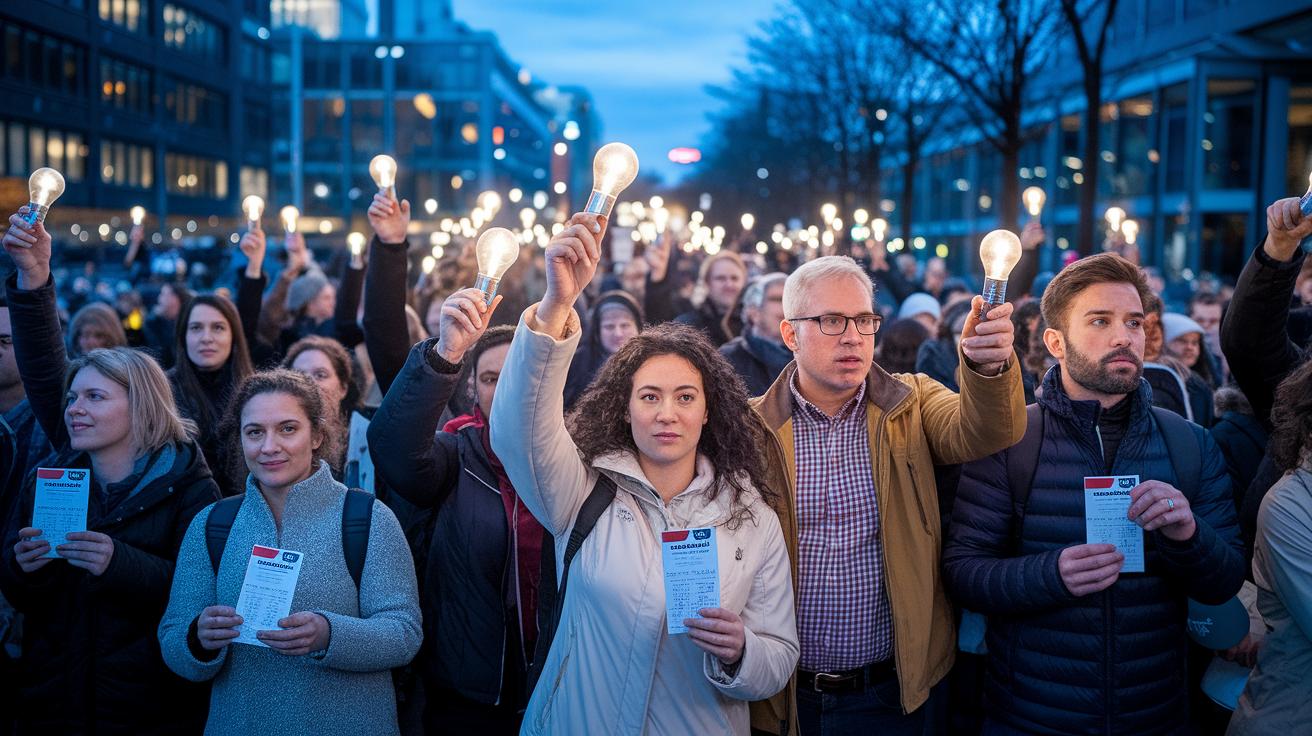

Is our political system really working for everyone or just a select few? This post explains how changing laws and government practices can boost fairness so every vote counts. When communities update voter lists and enforce stronger checks on power, they build trust and give people a true voice. These reforms pave the way for honest leadership and tighter community bonds, sparking a future where every person is heard.
Key Objectives and Principles in Political Reforms
Political reforms involve planned changes to laws, systems, and practices that aim to make government more open, fair, and accountable. They update the legal rules and government operations to meet today's standards. For example, a government might change its voting system so that every vote is clear and counts, ensuring elected officials stay answerable to the people.
These reforms focus on several clear goals:
- Expanding voter participation
- Strengthening checks on government power
- Reducing corruption
- Ensuring fair competition among political candidates
Such goals help create a political system where every citizen feels their voice matters. A clear example is when communities update voter registration processes so all voters stay informed and feel empowered.
International data shows that electoral reforms are a major focus. According to International IDEA, about 60% of reforms since 2000 have targeted electoral improvements. These changes include updating proportional representation, modernizing voter registers, and refining how districts are drawn. Governments worldwide use these reforms to make representation more effective and inclusive. This not only sharpens the system's procedures but also builds public trust and encourages stronger democratic participation.
Historical Evolution of Political Reforms Worldwide

In the 1800s, liberal changes spread across Europe. Voting rights were extended beyond property owners, giving more people a say in choosing their leaders and shaping policies. For example, in 1832 Britain broadened its electoral system by allowing more men to vote, slowly changing its political structure.
Across the Atlantic in the United States, a major milestone came with the 19th Amendment in 1920. This law granted women the right to vote, showing that democracy works best when everyone can participate. This step encouraged more political involvement and sparked similar changes around the world.
After World War II, many African and Asian countries rebuilt their governments as they gained independence from colonial rule. They introduced new constitutions and voting laws to ensure fairer representation, while leaders worked to make government more transparent and accountable.
Toward the end of the 1900s, Eastern Europe experienced significant change as one-party systems were replaced by multiparty democracies in 1989. Around the same time, South Africa adopted an interim constitution in 1993, bringing an end to apartheid. These reforms marked a global trend toward more inclusive governance and respect for the rule of law.
Major Types of Political Reforms and Their Focus Areas
When we look at political reforms, we see how different changes can make government work better and boost citizen participation. Each reform targets specific parts of the system to create a government that is more accountable and transparent.
-
Electoral reforms
Electoral reforms change the way votes are cast to ensure elections are fair and truly represent communities. These updates can include proportional representation, redrawing district lines, and revising voter ID rules. The goal is to give voters clear guidelines and adjust districts so that they mirror local interests. -
Constitutional reforms
Constitutional reforms update or rewrite key documents to shift how power is shared. These changes can modernize old rules and better balance the power between government branches. The result is a system that checks itself more effectively. -
Administrative reforms
Administrative reforms rework government operations by restructuring civil service and decentralizing authority. These changes streamline internal practices and improve how services reach the public, making government more responsive. -
Party system reforms
Party system reforms focus on the inner workings of political parties. They cover campaign financing, the way primaries are run, and internal voting processes. These steps help maintain party accountability to both members and the wider nation. -
Judicial reforms
Judicial reforms aim to keep courts independent and efficient. This might involve streamlining case management or building stronger barriers against political interference. Such reforms support the fair implementation of laws.
Even though each category addresses a different area, many reforms work together to build a more open and responsive political system.
Political reforms: Igniting a Brighter Future

Governments use a step-by-step approach to make changes that bring more openness and fairness. Elected leaders, community groups, and international advisors work together to identify issues and improve systems.
-
Agenda-setting
Leaders and experts gather information and listen to public views. They identify problems that need fixing. Public meetings, for example, help spotlight pressing issues. -
Policy formulation
Experts write proposals to address these issues. They discuss ideas with advisors and invite public input. This process, similar to Chile’s constitutional changes, aims to ensure fairness and effective use of resources. -
Legislative approval
Lawmakers debate and vote on the proposals. Once approved, these proposals become laws that reflect the people’s will. This step is crucial for broad backing. -
Implementation
After laws are passed, government agencies put the new rules into action. They might change procedures, train staff, and run public information campaigns to ensure a smooth transition. -
Evaluation
Officials and communities review how well the changes work. Feedback is used to fix issues quickly, helping reforms succeed over the long run.
Common Challenges and Opposition to Political Reforms
Political reforms often hit roadblocks that slow progress and leave the public feeling uncertain. Different groups within the system resist changes that might upset their control, and past reform efforts have made people wary of new promises.
Key power holders and long-established interests frequently block bold new measures. For example, in Nigeria, lawmakers pushed back on anti-corruption laws designed to cut graft (corruption in public office), stalling efforts to clean up the system. This kind of resistance can lead to reform fatigue, where people doubt that new policies will bring real change.
Limited resources and weak government systems also create hurdles. Many government offices struggle with outdated tools and insufficient funding, making it hard to roll out even the best ideas. When officials don’t get the support they need, well-planned policies can quickly lose momentum.
Rigid legal rules add another layer of difficulty. Strict constitutions and lengthy judicial reviews keep reformers waiting while public trust dwindles. Together, these challenges make it tough to build the strong, lasting change that many hope for.
Measuring the Impact of Political Reforms

Experts track reforms using clear, simple indicators. They check numbers like voter turnout, corruption scores, and World Bank governance ratings to measure public trust, government performance, and transparency. These figures offer a practical way to compare changes over time and between places.
• In New Zealand, reforms in 1986 boosted public sector efficiency by 20%, according to an IMF report. This shows how updating government practices can improve services.
• Tunisia’s 2014 constitutional changes increased its Freedom House democracy score by 10 points. This improvement reflects a stronger democratic framework.
• Other countries have experienced shifts in voter turnout and governance ratings after reforms, indicating that clear progress often lines up with wider political changes.
These numbers give useful insights into reform success, though they might not capture every nuance of political change.
Comparative Case Studies of Successful Political Reforms
Around the world, political reforms come in many shapes. Each country has used different methods to make government work better. The case studies below show how changes to constitutions, government operations, or court systems have helped reshape politics.
Germany’s 1949 Basic Law
In 1949, Germany built its modern democracy with a new law that set clear limits on government power. This law makes sure that lawmakers and judges keep each other in check. It also includes rules that protect citizens by letting courts review government actions. Today, this legal framework remains a key part of Germany’s stable federal system.
Rwanda’s Decentralization in the 2000s
During the 2000s, Rwanda started giving more power to local councils. This move meant that local communities could get resources and make decisions that mattered to them. As a result, services improved and local government became more responsive to everyday needs. This approach helped build a system that truly reflects the people's needs.
Mexico’s 2008 Judicial Reform
In 2008, Mexico revamped its court system to serve the public better. The changes made the courts more efficient and reduced case backlogs by 30%. By cutting red tape and simplifying procedures, the reform boosted public trust and made justice easier to access. This shows how improving court processes can renew a country’s legal system.
Tunisia’s Post-2011 Constitutional Changes
After the 2011 revolution, Tunisia made major changes to its constitution in 2014. The new rules introduced power-sharing and set aside spots for women in government. These measures opened the door for more people to take part in politics. Tunisia’s experience proves that inclusive reforms can reshape a country into a fairer democracy.
Reviewing these examples shows that well-thought-out reforms, whether by redoing a constitution, shifting power locally, cutting court delays, or opening up the political process, can greatly improve a political system. Each case highlights the idea that adapting reforms to local needs is essential for building effective, responsive governance.
Final Words
In the action, political reforms drive change by reshaping institutions and boosting fairness. This article outlined their objectives, historical shifts, major types, and steps for implementation. Each section showed how practical changes, backed by data and real examples, can steer societies toward better governance.
The discussion on challenges and successes offers a clear picture of reform impact. Positive shifts in transparency and accountability remind us that thoughtful adjustments can lead to lasting progress.
FAQ
Q: What are political reforms and what goals do they serve?
A: The explanation of political reforms describes planned changes to rules and institutions aimed at improving transparency, accountability and representation, including expanding voter participation, reducing corruption and ensuring fair competition.
Q: How have political reforms evolved throughout history?
A: The historical evolution of political reforms shows shifts from 19th-century liberal suffrage changes, to post-war constitutional overhauls during decolonization, to Eastern European transitions replacing one-party systems.
Q: What are the major types of political reforms and their focus areas?
A: The discussion on types of political reforms covers electoral changes, constitutional updates, administrative restructuring, party system adjustments and judicial reforms, each addressing specific system challenges to improve governance.
Q: What steps make up the standard process for implementing political reforms?
A: The standard process includes agenda-setting, policy formulation, legislative approval, implementation and evaluation, illustrating how stakeholders work through sequential stages to achieve lasting changes.
Q: What challenges and oppositions typically hinder political reforms?
A: The challenges range from vested interests blocking changes and public skepticism from earlier efforts to resource constraints and rigid legal frameworks that delay or halt reform progress.
Q: How is the impact of political reforms measured?
A: The impact of political reforms is measured using indicators such as voter turnout, corruption indices and governance scores, with country examples showing notable improvements in public sector efficiency and democracy ratings.
Q: What insights do comparative case studies of political reforms offer?
A: Comparative case studies reveal how different nations, including Germany, Rwanda, Mexico and Tunisia, implemented reforms, offering lessons on strategies, outcomes and best practices for effective political change.